The Wrist Theory Field Manual
Stop buying watches to impress people who aren't even looking.
A 74-page field manual for choosing watches from who you are. Not from the hype, the flex, or the algorithm.
74-page PDF · Instant download · 30-day guarantee
También disponible en español →
Not ready to buy yet?
Watch the channel first
Real videos, same ideas as the book. Free to watch, no strings attached.


Sound familiar?
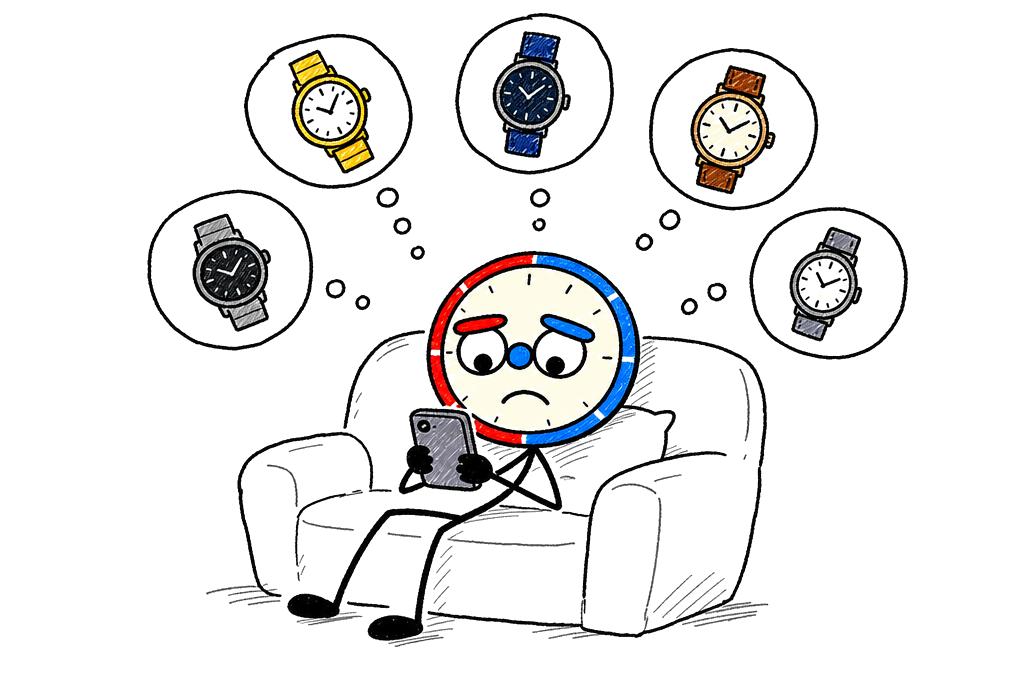
You already own the watch. So why are you still scrolling?
It always starts the same way. You tell yourself this is the one. The one that finally feels like enough. You wear it for a week, and then something quiet creeps back in. That itch to open the app, to scroll, to find the next one.
It was never really about the watch. It was about the gap between who you are and who you were trying to look like, for people who, honestly, weren't even looking.
So you buy again. And again. Chasing a feeling a strap was never going to give you.
The upgrade was never the answer. The frame was the problem.
What's inside
A system, not a shopping list
Seventy-four pages that change the question from "which watch?" to "who am I buying this as?"
- 1 Why the watch on your wrist says more about who you are than how much you spent
- 2 The real reason you keep wanting "just one more" (it isn't the watch)
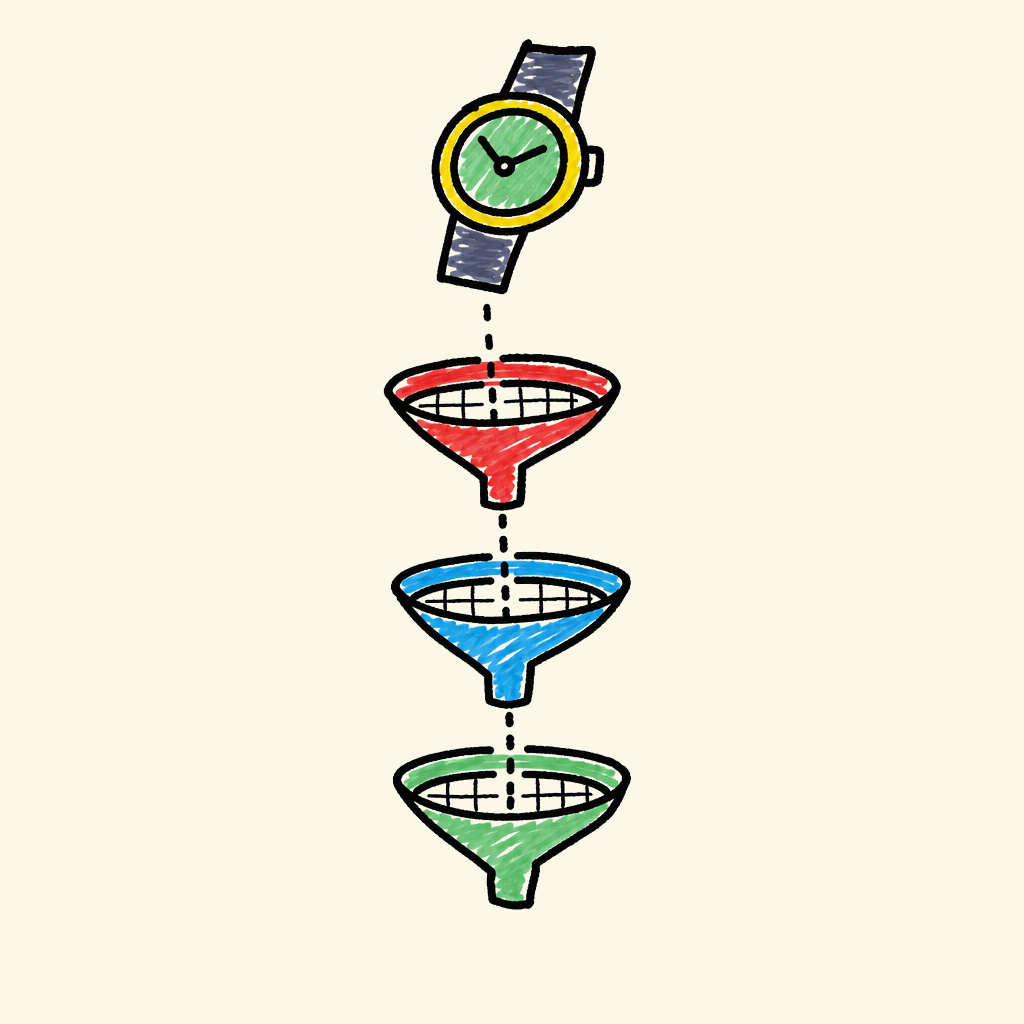
- 3 A three-filter system to decide what's worth buying before you fall for it
- 4 How to read any brand as an identity, not a price tag
- 5 The 90-day capsule method that ends the endless upgrade itch for good
What you receive
What you get
No inflated bonuses, no "$497 value." Almost all of it lives inside the book itself, and that is deliberate: you should not have to manage five files to use a system.
The Anti-Hype System — 74 pages
The full manual, sources cited. A PDF you download the second you pay, yours to keep.
The 5 Anti-Hype Cards
The whole system compressed onto five cards, for the exact moment your thumb is hovering over Buy.
Also free to email subscribersThe 90-Day Capsule exercise
Chapter 6, step by step: what you own, what you actually wear, and which gap is real. It takes an afternoon and a pen, and it is what turns the book into a decision instead of a read.
The brand-reading method
Chapter 4. How to tell in two minutes whether a brand manufactures anything, or just prints its logo on a generic movement and charges you triple for the story.
Lifetime updates
When the book grows, your copy grows. The second edition went from 68 to 74 pages and everyone who already owned it got it for nothing. That does not change.
One payment. No subscription, no app, no account to create.
And if what you want is someone to tell you which watch to buy, don't buy this. Seriously. It doesn't have that.
Honest check
Who this is (and isn't) for
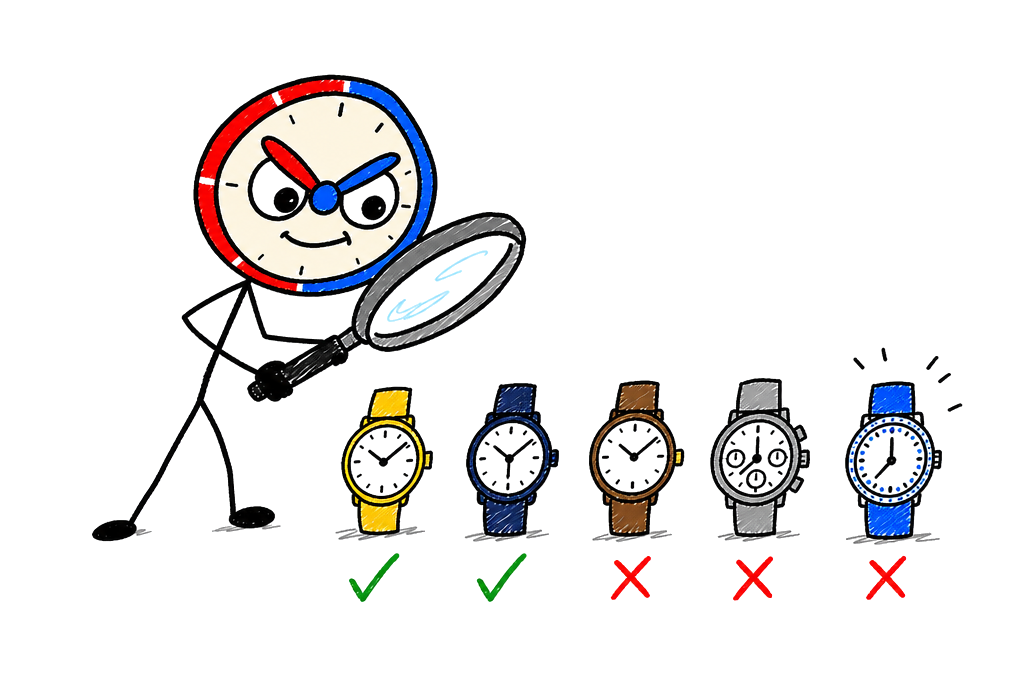
This is for you if…
- You're tired of buying to impress
- You want a system, not a ranking
- You wear Casio, Seiko, Orient, Citizen or Timex and feel good about it
- You've bought "the grail" and still felt empty
This isn't for you if…
- You want a top-10 list
- You're looking for investment watches
- You need someone to tell you what to buy
A look inside
Designed to be read, not skimmed
Clean typography, real frameworks, zero filler. This isn't an ugly PDF dump.
Chapter 02
The Three Filters
Before any watch earns a place on your wrist, it has to clear three questions: identity, use, and honesty.
p. 23
Chapter 04
Reading A Brand
A logo is a story about who you want to be. Learn to read the story before you pay for it.

p. 41
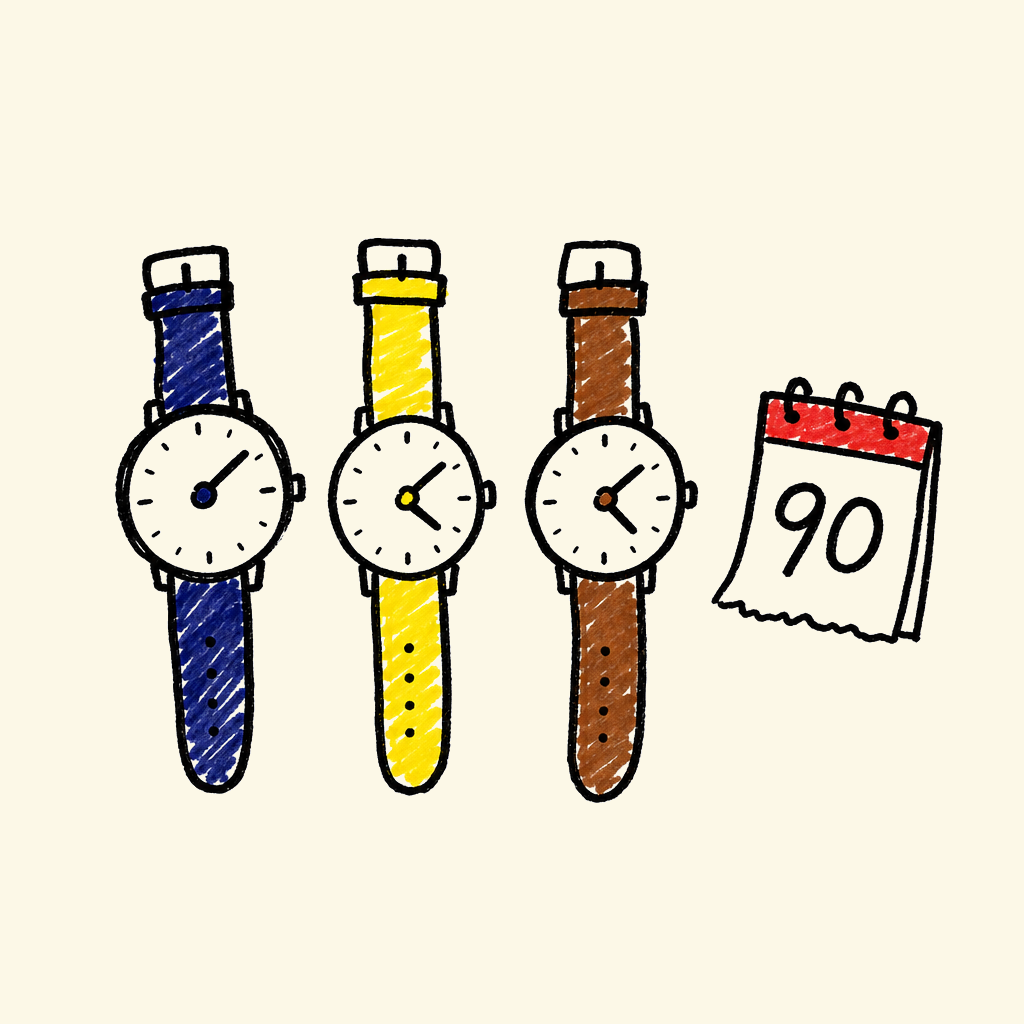
Chapter 06
The 90-Day Capsule
Three watches. Ninety days. One rule that quietly ends the upgrade itch.
p. 58
A note from the maker
My most expensive watch sits in a drawer.
My name's Daniel, and I run Wrist Theory. Let me tell you about the most expensive watch I own. It's a Mido. I didn't even buy it, it was a gift, and it's genuinely beautiful. It also lives in a drawer, barely worn.
It isn't the watch's fault. I love what it means, and I love the person who gave it to me. But every time I put it on, it just doesn't feel like me. It took me an embarrassingly long time to admit that the price had nothing to do with it.
The watch I actually wear every day is one my mom gave me. It isn't the famous name, and on paper it isn't even the "best" watch I own next to my Seiko or my Casio. I wear it because of what it means, and because I genuinely love the way it looks. Yes, I run a watch channel and my daily is a sentimental pick. That's kind of the whole point.
That gap, between the expensive watch I never wear and the meaningful one I never take off, is what this whole book is about. Watches were never really about price, or the brand everyone recognizes, or what's hot this year. They're about whether the thing on your wrist is actually you.
I wrote The Anti-Hype System to give you the criteria, and the honest psychology behind buying, so you stop making the purchases you quietly regret. And I'll be straight with you: it also helps me keep making the channel better. Just the system.
It costs less than one watch you'll never wear. That alone makes it the easiest call on this page.

Daniel, Wrist Theory
@WristTheorys
No borrowed statistics
The math
I am not going to quote industry statistics at you. The ones that get passed around have no source that survives a look, and this channel is called Anti-Hype. So let's use the only numbers that matter: yours.
| One ordinary year | How you buy now | With the system |
|---|---|---|
| Watches bought | 3 | 1 |
| Average price | $300 | $600 |
| Still wearing at 12 months | 1 | 1 |
| What you get back selling the other two | close to nothing, and you know it | — |
| Spent that year | $900 | $600 |
The system does not tell you to spend less per watch. It tells you to stop buying three to end up wearing one.
That table's difference is $300 a year. The manual costs less than the strap you were going to put on the second one.
Swap in your own numbers. If you bought two watches last year and you wear both today, close this page: you don't need me, and I like you. If running the numbers made you uncomfortable, that is exactly the book.

No pressure
Money-back guarantee
If it doesn't change how you think about your next watch, email me within 30 days, tell me in one line what didn't land, and I'll refund you. It isn't a form and it isn't an interrogation: it's one sentence, and it helps me make the book better. The risk is mine, not yours.
Questions?
Before you ask
The honest answers, no fine print.

Is this a physical book?
Nope. It's a 74-page PDF. You download it the second you buy and read it on your phone, tablet, or laptop.
Twenty dollars for three tips?
That question showed up in the comments, and it's my fault: the channel sold “the three filters” as if they were the whole product. They're not. They're one chapter, chapter 2.
The other six are the 90-day capsule, how to read a brand without believing its own story, why the second-hand market punishes exactly the watches that get advertised hardest, real cost per wear, what to do with what you already bought and never wear, and how to hold the decision when the algorithm comes back at you. Seventy-four pages, sources cited.
I'm on a Casio / Seiko budget. Is this for me?
Especially for you. The whole system is built around $50 to $500 watches, not flexing five figures.
Will it just tell me what to buy?
No. It gives you a way to decide for yourself. A system, not a top-10 list.
What if it's not for me?
30-day money-back guarantee. Email me within 30 days, tell me in one line what didn't land, and I'll refund you. That one line is the only condition, and it's there because it's the fastest way I get to fix the book.
How do I get it after paying?
Instantly. You'll get a download link on the confirmation page and by email.
Why does the price change by country?
Because twenty dollars in New York and twenty dollars in Mexico City aren't the same amount of money. The price adjusts to where you're browsing from, so it weighs about the same on both ends.
It's not a sale and it isn't a promotion that ends. You won't see a struck-through price or a countdown timer here, because pointing at exactly those tricks is what this channel is for.

Last thing
Buy the next one as you. Not as the algorithm.
74-page PDF · Instant download · 30-day guarantee
@WristTheorys
También disponible en español →